



Planning to open a new business in Toronto in 2026? You’re not alone. Small enterprises, side hustles, and creative storefronts are breathing new life into Canada’s largest city. But success isn’t just about your product or service; it’s also about picking the right place to plant your flag.
Some districts thrive on foot traffic, others draw families and commuters, and a few still offer affordable rents amid transit upgrades.
This guide explores the best neighbourhoods in Toronto to open a new business in 2026, based on official development plans, transit projects, zoning policy updates, and community vibes.
By the end, you’ll know where to set up shop, why infrastructure matter,s and how to navigate licensing and permits.
Why Location Matters More Than Ever
A neighbourhood isn’t just a backdrop; it’s a business partner. In 2025, location drives the daily rhythm of foot traffic, influences how much rent you’ll pay, and determines how easy it is for customers to reach you.
Toronto’s downtown core remains busy, yet emerging corridors with transit expansions and zoning changes will shake things up. If you’re thinking long-term, consider an area where new transit lines or street improvements are planned; people will flock there once construction is complete.
Key Transit & Policy Changes Shaping Business Zones in 2026
Toronto’s growth isn’t static. Several fresh developments in 2025 will reshape neighbourhood dynamics:
- Ontario Line & Don Valley Station: Metrolinx is building the Ontario Line, a rapid‑transit line that will connect east and west. It’s Don Valley Station at Don Mills and Eglinton will serve as a major hub linking the Ontario Line to the Eglinton Crosstown LRT and local/express bus routes. Early investors around Don Mills–Victoria Village could lock in lower rents before the station opens and commuter demand spikes.
- Eglinton Crosstown LRT (Line 5): The Crosstown LRT remains under testing. Metrolinx has confirmed the September 2025 target will not be met, and the line is now expected to open no earlier than late 2025, with delays still possible. Businesses along Eglinton East and the Golden Mile should plan for a gradual increase in foot traffic as the line opens in stages.
- Waterfront East LRT (WELRT): East Bayfront, a waterfront community, will benefit from enabling works and design progress for the WELRT. The Waterfront East LRT (WELRT) is still in the planning and design phase, with enabling works underway. Once completed, it is expected to bring more visitors to Queens Quay East and strengthen East Bayfront’s pull.
- Neighbourhood Retail & Services Policy: Toronto’s proposed zoning changes permit small stores, cafés, clinics, and professional offices on major streets and select interior lots, with size limits of up to 1,600 sq. ft. on major streets and 1,200 sq. ft. inside neighbourhoods.
This means budding entrepreneurs can legally open shops near their homes and schools, as long as they meet size and staffing limits. Knowing these rules early helps you pick compliant locations and avoid permit delays.
Criteria for Choosing Toronto’s Best Neighbourhoods in 2026
Our picks weren’t random. Each neighbourhood had to check multiple boxes:
- Transit Access: Current and planned. Proximity to subway or LRT stations increases foot traffic and broadens your customer base.
- Zoning & Permitting – Areas with favourable zoning or upcoming policy changes will be quicker to open in.
- Foot‑Traffic Catalysts: Community events, new housing, schools and parks draw steady local and tourist traffic.
- Affordability vs. Opportunity: Rent levels relative to expected sales. We favoured districts where costs haven’t yet skyrocketed.
- Brand Fit: Whether the area’s vibe matches your concept (family‑friendly, creative, professional, etc.).
We also cross‑checked official documents and BIA updates to verify each neighbourhood’s prospects.
Best Toronto Neighbourhoods to Open a New Business in 2026
Here’s a quick snapshot of the neighbourhoods we’ll explore:
- Clairlea‑Birchmount: Benefiting from Golden Mile redevelopment, great for daily needs retail.
- Wexford‑Maryvale: Affordable east‑end strip with a strong food culture.
- Don Mills–Victoria Village – Future regional transit hub at Don Valley Station.
- The Danforth (East & Mosaic): Complete‑street upgrades attract restaurants and lifestyle retail.
- Queen Street West: World‑renowned creative district with heavy footfall.
- Parkdale: Arts‑driven storefronts and community events.
- East Bayfront: Waterfront development with high‑speed connectivity and parks.
- Leslieville/Riverside: Maker hubs with film and creative industries overlap.
- St. Clair West: Mature streetcar spine with a steady dining strip.
- Kensington/Chinatown: High tourist and resident footfall; diverse food scene.
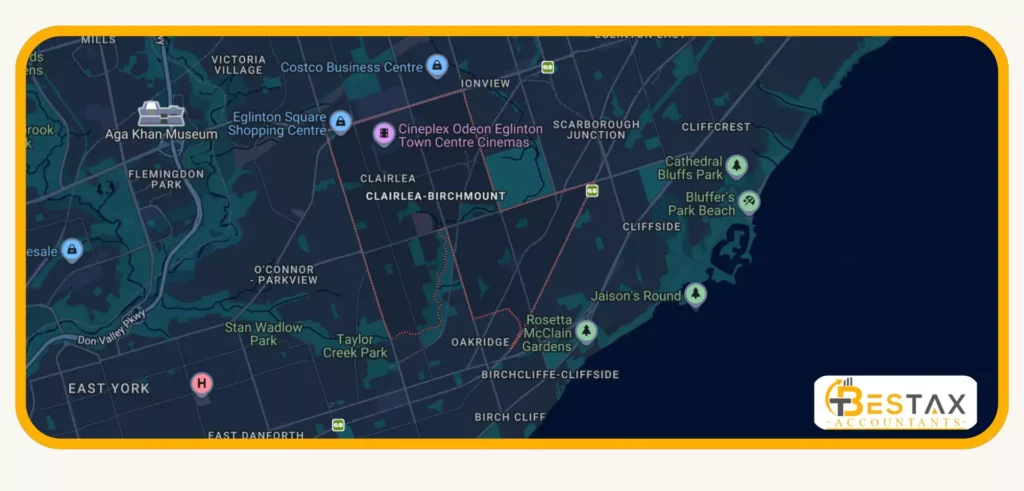
1. Clairlea-Birchmount: Rising Star Along the Golden Mile Redevelopment
What Makes It Special?
Clairlea‑Birchmount sits in Scarborough, adjacent to the Golden Mile, a corridor undergoing a massive mixed‑use transformation. As the Eglinton Crosstown LRT brings new mobility, thousands of new units and retail spaces will line Eglinton East. This means more residents and errands, translating into consistent demand for daily‑needs retail, think clinics, tutoring centres, cafés and pharmacies.
Signals to Watch
- Mixed‑Use Proposals: Projects along Warden and Victoria Park are bringing new condos and ground‑floor retail.
- Crosstown Ramp‑Up: The line isn’t fully operational yet, but once open it will transform commuting patterns.
Best Business Fits
- Health and wellness clinics (dentists, physiotherapists)
- Specialty grocers and convenience stores
- Tutoring and enrichment centres
- Coffee shops and bakeries
2. Wexford-Maryvale: Affordable East-End Opportunity

Why It Works
Wexford‑Maryvale may fly under the radar, but investors are watching. The area is part of the Golden Mile’s sphere of influence, and nearly half its residents are families.
It boasts a celebrated strip of restaurants and affordable corner‑lot spaces perfect for first‑time operators. Because the Crosstown doesn’t pass through it directly, rents remain lower, yet highway and transit access still provide connectivity.
Best Business Fits
- Quick‑service food (dessert cafés, bubble tea)
- Specialty retail (bakeries, cultural groceries)
- Professional offices (real estate, consulting)
- Auto‑related services (detailing, car wash)
Pro Tip
Secure a plaza unit or corner lot now; once the Golden Mile towers fill up, demand and rents will rise.
3. Don Mills–Victoria Village: Future Hub with Ontario Line Connection
Why It’s on the Radar
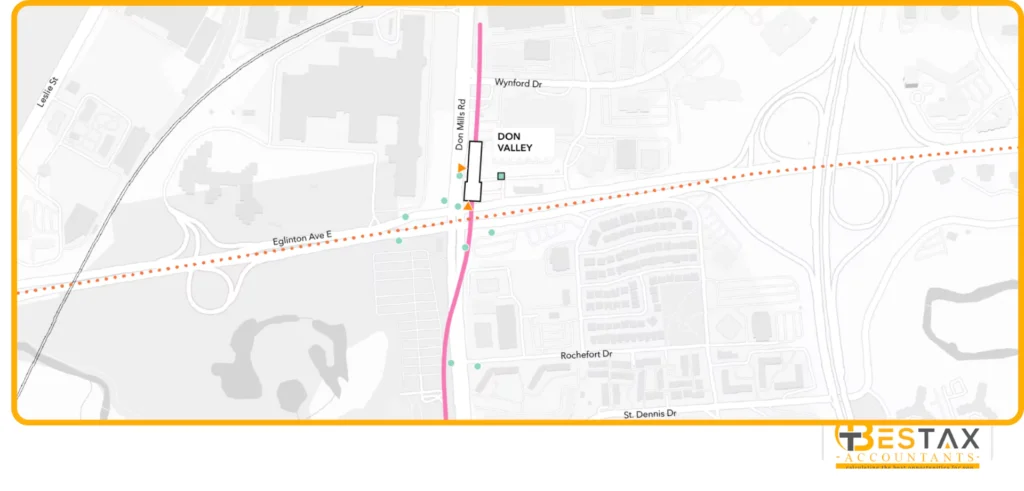
Don Mills and Eglinton is set to explode. Metrolinx’s Don Valley Station will connect the Ontario Line to the Eglinton Crosstown LRT and bus networks. This hub will put thousands of commuters right at your doorstep. Additionally, homes here are more affordable than downtown, yet the area enjoys mature trees and views of the Don Valley.
Best Business Fits
- Wellness and healthcare services (physiotherapy, optometry)
- Grab‑and‑go food concepts designed for commuters
- Co‑working and education spaces
- Boutique retail that leverages commuter flows
Plan Ahead
Leases signed today may look cheap in three years. Remember: transit construction can scare off some tenants, but those who stick it out often reap the rewards when the station opens.
4. The Danforth (East & Mosaic): Where Community Meets Cuisine
Why It’s Buzzing
Danforth Avenue has long been known as Toronto’s “Greek Town,” but the east section near Main Street and the Danforth Mosaic BIA is evolving. The City is preparing a complete‑street upgrade scheduled to begin in late 2025, improving sidewalks, cycle tracks, and the public realm.
This will make the corridor safer and more vibrant for pedestrians and cyclists, ideal for restaurants, cafés and lifestyle retail. Business associations actively organise events and promotions, boosting foot traffic year‑round.
Best Business Fits
- Family‑friendly dining (Mediterranean, vegan, or international cuisine)
- Boutique fitness studios and health clubs
- Bookstores, gift shops and artisanal goods
- Specialty grocery and gourmet food outlets
For more details on how to start a restaurant in Toronto, read this article: How to Start a Restaurant in Canada
Insider Tip
Look for spaces near subway stations like Main Street or Woodbine; you’ll catch both local families and commuters.
5. Queen Street West: Toronto’s Creative Heart
The Creative District
If your brand thrives on creativity and culture, Queen West is still the place. The Queen Street West BIA represents over 300 merchants and highlights a thriving fashion district with clothing boutiques, sewing supplies, and internationally renowned live music venues. There’s a constant mix of shoppers during the day (looking for the latest streetwear or art supplies) and diners and music lovers at night. Visitors can find fashion‑forward clothing, global cuisine, and patio bars in one afternoon.
Best Business Fits
- Galleries and art studios
- Streetwear and design boutiques (DTC showrooms)
- Trendy cafés and dessert bars
- Nightlife‑adjacent concepts (cocktail lounges, themed bars)
Keep in Mind
Rents are higher here, but so is brand visibility. If you’ve got a unique concept that benefits from international tourists and media coverage, Queen West could be worth the investment.
6. Parkdale: Indie and Arts‑Driven

Why Entrepreneurs Love It
Parkdale sits just west of downtown along Queen Street West, but it feels like a village within a city. It’s known for arts‑driven storefronts and a community that values independent businesses. The Parkdale Village BIA has been hosting festivals and events for decades; from 2013–2019, it produced the “Spring into Parkdale Sidewalk Festival & Night Market,” featuring over 100 vendors, live entertainment and family activities.
While the festival was paused to reallocate funds, the BIA now hosts events like the Parkdale Music Crawl & Sidewalk Sale in August.
Best Business Fits
- Vintage stores and upcycled fashion
- Maker studios and artist collectives
- Independent cafés and world‑cuisine restaurants
- Community‑focused wellness services (yoga, acupuncture)
Business Tip
Parkdale’s renters value authenticity. Engage with the BIA, participate in sidewalk sales, and consider a pay‑what‑you‑can event to build goodwill.
7. East Bayfront: Waterfront Innovation Hub
Why It’s Unique
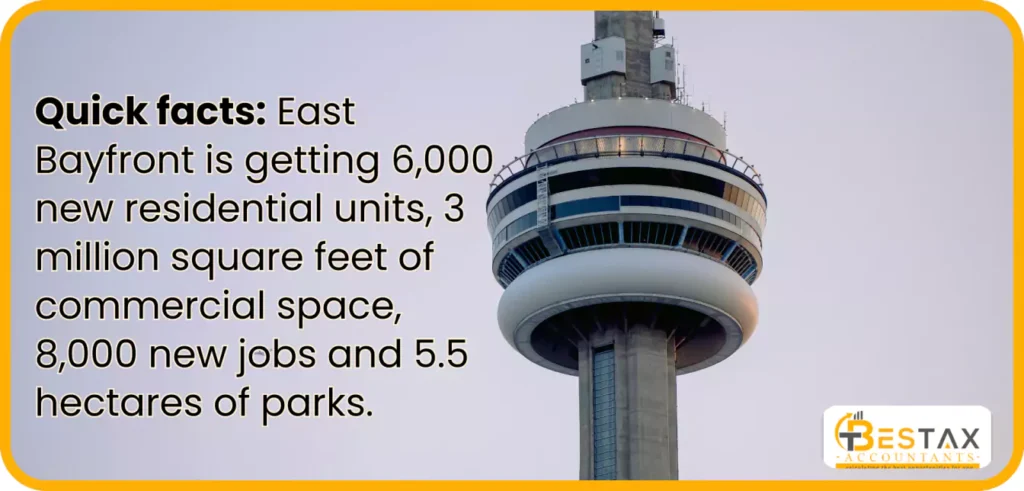
East Bayfront is part of Toronto’s waterfront revitalisation. Waterfront Toronto describes it as a mixed‑use community with residential, retail, institutional and commercial development and a 1 km continuous promenade along the water.
It also boasts an ultra‑high‑speed fibre optic network that attracts tech and media companies.
Best Business Fits
- Waterfront cafés and casual dining
- Boutique fitness (yoga, spinning) with harbour views
- Experiential retail (interactive galleries, VR experiences)
- Kid‑friendly attractions and educational facilities
Look Ahead
As the WELRT moves forward, East Bayfront will become even more accessible. Getting in early could position you as a waterfront pioneer.
8. Honourable Mentions: Emerging Corridors to Watch
Beyond the top picks, several other areas show promise:
Leslieville/Riverside
These east‑end neighbourhoods combine a thriving maker community with film and media industries. You’ll find independent shops, craft breweries and film studios. They’re ideal for artisanal products, production services and lifestyle brands.
St. Clair West
This midtown strip has long been anchored by the streetcar, which means consistent foot traffic. Diverse restaurants, cafés and bakeries line the corridor. With modest rents and a loyal local customer base, it’s perfect for food and neighbourhood services.
Kensington/Chinatown
High tourist numbers and a unique food scene make this area vibrant. It’s full of international grocers, food markets and quirky retail. New entrepreneurs can tap into global flavours and urban exploration.
Zoning & Policy Watch: What Small Businesses Need to Know
Toronto’s Neighbourhood Retail & Services initiative is opening doors. According to the City’s 2024 policy update, the city proposes allowing small-scale retail stores, cafés, medical offices, after-school programs, cleaners, barbershops and professional offices on major streets and limited interior lots.
The plan also permits small retail stores with optional café components on corner lots near schools or parks.
Home-based businesses could hire up to two employees and operate from detached garages. The city is setting size limits and requiring indoor garbage storage to minimise impacts.
What does this mean for you?
If you’ve looked at a house‑form unit on a major street but weren’t sure you could legally operate, 2026 is the year to explore. Keep an eye on the final adoption of the by‑law; once in force, these changes will reduce red tape for micro‑retailers and service providers.
Neighbourhood Cheat‑Sheet: Matching Your Business Type
Not sure where your concept fits? Use this quick reference:
| Business Type | Top Neighbourhoods |
|---|---|
| Clinics & Wellness | Clairlea‑Birchmount, Don Mills–Victoria Village |
| Cafés & QSR | Wexford‑Maryvale, Danforth, Parkdale |
| Creative & DTC Retail | Queen Street West, Parkdale, Leslieville |
| Hospitality & Experiential | East Bayfront, Queen West |
| Education & Tutoring | Clairlea‑Birchmount, Don Mills–Victoria Village |
How to Pick Your Perfect Block
Even within a neighbourhood, the specific block matters. Here’s a framework:
- Stand Outside: Count passersby during peak and off‑peak times. A difference of 20 vs. 80 people per hour could make or break a coffee shop.
- Map Anchors: Identify schools, parks, clinics, and transit stops within an 800‑metre radius. More anchors mean more reasons for people to visit your block.
- Call the BIA: Ask about street festivals, maintenance issues, and upcoming construction. An engaged BIA can drive free marketing.
- Check Zoning Early: Confirm your business use is permitted. For building changes, you’ll need building permits and possibly a Zoning Applicable Law Certificate; there’s no point signing a lease you can’t legally use.
- Stress‑Test the Rent: As a rule of thumb, aim for rent around 8–12% of projected gross sales. If your concept is more labour‑intensive, you may need to spend less on rent.
Step‑by‑Step: How to Set Up Your Business in Toronto (2025)
Starting a business in Toronto involves more than just picking a neighbourhood. Here’s a plain‑English checklist:
- Choose Your Business Structure: Decide whether you’ll operate as a sole proprietorship, partnership or corporation. Consider liability, taxes, and investment needs.
- Name Search & Registration: Use the Ontario Business Registry to search and register your business name or incorporate your company.
- Get a CRA Business Number & HST Registration: Once your revenue exceeds $30,000 in a single quarter or four consecutive quarters, register for GST/HST; this allows you to claim input tax credits on purchases.
- Licences & Permits (City of Toronto): Check the City’s Business Regulations portal. Most businesses need a zoning review; if your concept needs interior alterations, apply for building permits and a Zoning Applicable Law Certificate.
- Signage: If you want an exterior sign, apply for a First‑Party Sign Permit under Toronto’s Chapter 694 by‑law. Don’t assume the landlord’s existing sign is legal, many aren’t.
- Sector‑Specific Approvals: Food operators need inspections from Toronto Public Health (DineSafe), while personal service settings (e.g., spas, nail salons) must meet provincial infection‑control requirements.
- Employer Setup: If you plan to hire staff, open a payroll account with the CRA, register for WSIB (workers’ compensation) and set up a separate business bank account.
- Join the Local BIA: Business Improvement Areas provide marketing, street cleaning, beautification and events. Membership fees are usually built into property tax, but active participation yields returns.
Conclusion: Contact Pros Like Bestax
Launching a business is both exciting and complex. Bestax specialises in helping entrepreneurs find the right neighbourhood, structure their companies, and secure permits quickly.
From incorporation and GST/HST registration to licence applications and payroll setup, their team ensures you hit the ground running. Contact Bestax today to start your Toronto business journey.
FAQs About Launching a Business in Toronto in 2025
Q1: What Toronto neighbourhoods are best for launching a business in 2026?
Start with Clairlea‑Birchmount, Wexford‑Maryvale, Don Mills–Victoria Village, Danforth, Queen West, Parkdale and East Bayfront. Each offers a mix of transit access, zoning flexibility and community momentum.
Q2: Why are areas like Clairlea‑Birchmount and Wexford‑Maryvale gaining traction?
They sit near the Golden Mile redevelopment with planned mixed‑use towers and are expected to benefit from the Crosstown LRT’s eventual completion. This brings more residents and retail needs.
Q3: What makes Parkdale and Queen Street West ideal for creative businesses?
The Queen West BIA notes that the area is home to fashion boutiques, sewing supplies and live music. Parkdale’s BIA hosts street festivals and sidewalk sales, fostering a community that appreciates independent and artistic storefronts.
Q4: Are there zoning changes in Toronto that impact small business startups?
Yes. The City’s Neighbourhood Retail & Services proposal would allow small stores, cafés, clinics and professional offices on major streets and some interior locations. Size limits and indoor garbage requirements aim to protect neighbours while encouraging local commerce.
Q5: How does infrastructure improvement affect neighbourhood business potential?
New transit lines like the Ontario Line and WELRT bring more foot traffic and broaden your catchment area, while complete street projects encourage visitors to linger and shop.
Q6: Is East Bayfront a viable area for new commercial ventures?
Waterfront Toronto’s plan calls for 6,000 residential units, 3 million sq. ft. of commercial space and 5.5 hectares of parks. The area’s fibre‑optic infrastructure is perfect for tech and creative industries.
Q7: What role does transit access play in choosing a business location in Toronto?
Transit increases foot traffic and makes it easier for customers to visit. Hubs like Don Valley Station will have thousands of commuters passing by each hour, which is a boon for service and grab‑and‑go businesses.
Q8: Which up‑and‑coming GTA neighbourhoods should entrepreneurs eye?
In addition to the core picks, watch the Golden Mile, Leslieville/Riverside and St. Clair West. Each is undergoing or planning significant redevelopment and offers unique niches for new ventures.
Disclaimer: The information provided in this blog is for general informational purposes only. For professional assistance and advice, please contact experts.