


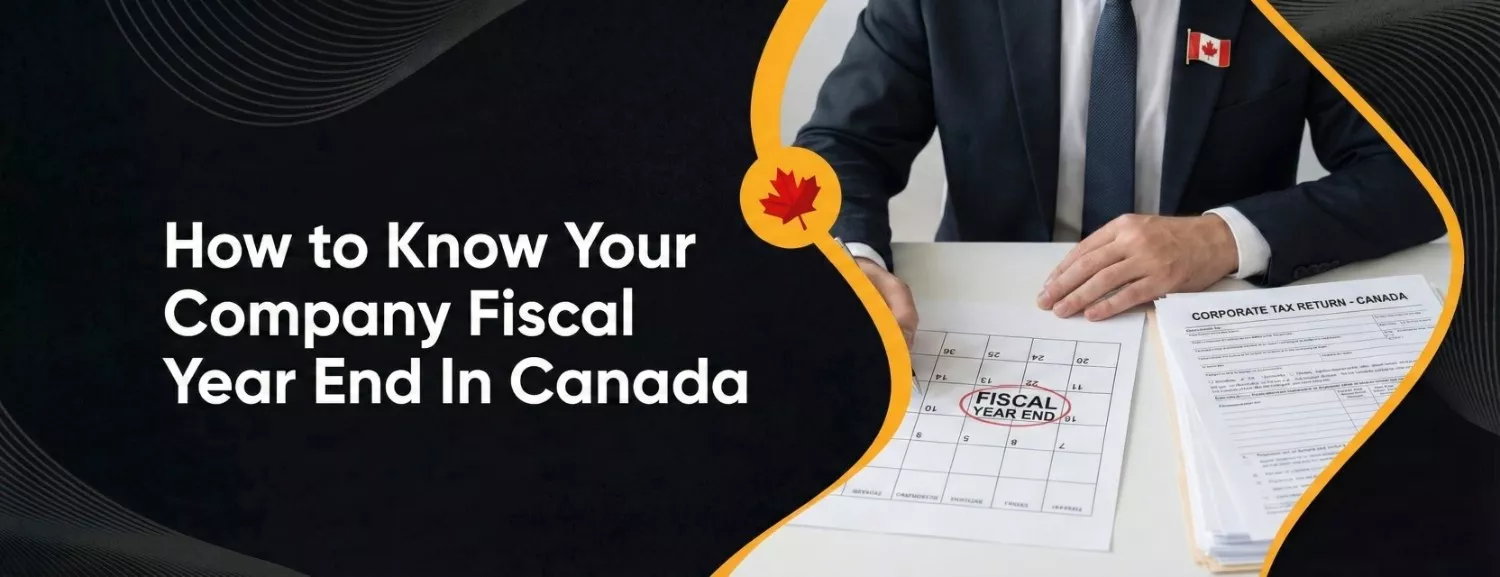
When you incorporate a business in Canada, you need to decide which fiscal year it will follow. This date isn’t just another number on the calendar; it influences everything from cash‑flow planning to the deadline for filing your corporate tax return. Yet many entrepreneurs still confuse the fiscal year with the calendar year or assume they must file on 31 December.
This comprehensive guide explains what a fiscal year is, how it differs from a calendar year, the rules set by the Canada Revenue Agency (CRA), and the factors businesses should consider when selecting or changing their fiscal year‑end.
Understanding the fiscal year vs the calendar year
A fiscal year (also called a tax year or financial year) is the 12‑month period your company uses for accounting and tax reporting. Unlike the calendar year, which always runs from January 1 to December 31, a fiscal year can start and end on any dates that suit your business needs. The CRA limits a corporation’s fiscal period to a maximum of 53 weeks (371 days), but within that constraint, you have flexibility.
A fiscal year differs from the calendar year in several ways:
| Aspect | Fiscal year | Calendar year |
|---|---|---|
| Definition | A company’s 12‑month business cycle and reporting period | Always runs January 1 to December 31 |
| Set by | The business on its first tax return; must end within 53 weeks of incorporation | Fixed by the Gregorian calendar |
| When chosen | At incorporation or when setting up a fiscal year (can be changed with CRA approval) | Not chosen; predetermined |
| Impact on taxes | Determines deadlines for filing T2 returns and remitting taxes | Used by sole proprietors and partnerships that must report on a calendar‑year basis |
Why do corporations use fiscal years
Corporations aren’t required to follow the calendar year. In fact, a different year‑end may better reflect your business’s operational cycle and help with cash‑flow planning. For example, a retail business may avoid a December 31 year‑end because the holiday season is busy and inventory is high. Choosing a month when operations are slower allows you to complete the year‑end accounting and inventory counts with minimal disruption.
Sole proprietors and partnerships
Not all businesses can pick any fiscal year. If you operate a sole proprietorship or certain professional corporations that are members of a partnership, the CRA requires you to report your business income on a calendar‑year basis.
Other sole‑proprietor businesses can elect to use an alternative fiscal period, but this requires meeting specific conditions and is available only to individuals or partnerships where all partners are individuals.
CRA rules for choosing your company’s fiscal year-end
53‑week limit and first-year choice
When you incorporate, you may choose any fiscal year‑end date within 53 weeks of the incorporation date. The start of your very first tax year is the date of incorporation, and the end of that fiscal period can be any date you select within those 53 weeks. After your first year, each new fiscal year begins the day after your chosen year‑end.
Example: A corporation incorporated on May 18, 2024 chooses October 9, 2024 as its fiscal year‑end. Its first tax year runs from May 18, 2024 to October 9, 2024; the second year runs from October 10, 2024 to October 9 2025. Professional corporations that are members of partnerships must instead adopt a December 31 year‑end.
Declaring the fiscal year on your T2 return
You declare your corporate fiscal year when you file your first T2 corporate tax return. The CRA requires corporations to file within six months after their fiscal year‑end, and you must ensure that the financial statements or General Index of Financial Information (GIFI) match the fiscal period stated on the return. If your corporation owes tax, payment is typically due within three months of your year‑end; if no tax is owed, you still have to file within six months.
Approval is needed to change your fiscal period
Once your company chooses a fiscal year, it generally must keep the same year‑end each year. To change your fiscal period you must write a letter to your CRA tax services office explaining why you want to change and the effective date. The CRA may approve the change for valid business reasons such as aligning with a parent company or simplifying reporting.
There are exceptions where no approval is needed, including when the corporation is winding up, emigrating, becoming or ceasing to be tax‑exempt, or if control of the corporation changes. Even in bankruptcy, CRA approval is still required.
Sole proprietors and partnerships
Self‑employed individuals and certain partnerships must use a calendar year for tax reporting. An alternative method exists for individuals to use a non‑calendar fiscal period, but they must elect this method and meet CRA criteria. Partnerships that include professional corporations or individuals who are partners in other partnerships cannot use this alternative method.
Factors to consider when selecting your fiscal year-end
Choosing the right fiscal year isn’t just about picking any date; it should be a strategic decision based on your business operations, cash flow, tax planning, and industry norms. Below are factors to weigh, along with real‑world examples.
1. Your natural business cycle
Seasonal or cyclical businesses should align the fiscal year with their natural business cycle. The aim is to end your fiscal year when operations are quieter, inventory levels are lower, and staff have time to complete administrative tasks. Examples of natural business cycles include:
- Education: Schools and universities often end their fiscal year in late summer to coincide with the academic year.
- Non‑profits: Many charities pick March 31 because grant deadlines and government funding align with the federal government’s fiscal year.
- Retail: Retailers typically choose a year‑end after the holiday rush, when inventory is lowest and sales have tapered off.
- Agriculture: Farmers may select a year‑end after the major harvest to capture a full growing season.
2. Operational convenience
Your fiscal year should minimize disruption to operations. By choosing a slower period, you can allocate time to close the books, perform inventory counts and prepare financial statements without interfering with customer service.
Businesses that operate primarily during certain seasons (such as tourism, landscaping or construction) can benefit from a fiscal year‑end shortly after the slow season, giving staff time to reconcile accounts.
3. Tax planning and cash‑flow management
A fiscal year‑end determines when corporate taxes are due and can affect cash flow. For example:
- Corporations can deduct employee bonuses when they are accrued but not paid until within 180 days after the fiscal year‑end. Choosing a later fiscal year‑end allows you to defer paying the bonus and postpone including it in employees’ personal tax returns.
- Selecting a year‑end close to 53 weeks from incorporation delays the first tax bill, giving new businesses additional time to generate cash and utilize the small business deduction.
- If you need to retain profits in the business for expansion, a fiscal year‑end after your peak season means taxes aren’t due until months later, helping with cash‑flow planning.
Example: A corporation incorporated on September 1 2024 could select a fiscal year‑end of August 31 2025. Filing the T2 return within six months (by February 29 2026 if no tax is owed) allows the business almost 18 months before paying the first tax liability.
4. Industry regulations and partnerships
Some industries or corporate structures mandate specific fiscal year‑ends. Professional corporations that are members of a partnership must adopt a December 31 year‑end. Sole proprietors and certain partnerships must also report on a calendar year. Review industry‑specific legislation and partnership agreements before selecting your fiscal year.
5. Alignment with investors or parent companies
If your company is part of a group or has investors that follow a particular year‑end, aligning your fiscal year can simplify consolidated reporting and investor communications. When aligning, ensure you still meet the CRA’s 53‑week limit and obtain approval if changing an existing fiscal period.
6. Administrative workload and professional availability
Choosing a fiscal year during peak tax season (December 31) can make it harder to find available accountants and auditors. Selecting an off‑peak date may reduce professional fees and ensure your accountant has more time to prepare accurate statements and tax filings. Always confirm your accountant’s availability before finalizing a fiscal year.
Which fiscal year‑end date should you choose?
There is no one‑size‑fits‑all answer, but here are common options:
- Calendar year (December 31) – convenient if you are already managing books on a calendar basis or aligning with shareholders’ personal tax filings. However, it can be hectic and may limit tax‑planning flexibility.
- Last day of the month closest to the 53‑week mark – recommended by many accountants because it maximizes the first fiscal period and postpones taxes and professional fees. Choosing the last day of a month also keeps books clean and aligns with monthly GST/HST reporting.
- Industry‑specific dates – as discussed above, retail after the holiday season, agriculture post‑harvest, education post‑academic year, etc.
Table: Sample fiscal year‑ends by industry
| Industry/sector | Typical fiscal year‑end | Reasons |
|---|---|---|
| Retail (e.g., clothing, electronics) | January 31 | Avoids December rush, inventory is lower |
| Agriculture/farming | After major harvest (e.g., October 31) | Captures full growing season |
| Education (schools, colleges) | June 30 or July 31 | Aligns with academic year |
| Non‑profits | March 31 | Aligns with government funding cycles and grant deadlines |
| Professional corporations in partnerships | December 31 | Required by CRA |
Declaring and filing your fiscal year
Filing the T2 corporation income tax return
Once you select your fiscal year‑end, you must submit a T2 return within six months. If you owe tax, payment is due within three months of the year‑end. Always ensure your financial statements or GIFI attached to the return match the dates of the fiscal year.
GST/HST reporting
Your fiscal year‑end affects your GST/HST reporting period. According to CRA guidance, the period you choose determines when GST/HST returns and remittances are due. Aligning your GST/HST period with your fiscal year can simplify bookkeeping and minimize the number of reporting dates.
Small business deduction and other tax credits
The small business deduction reduces corporate tax rates on active business income up to a certain threshold. By selecting a fiscal year‑end just after 12 months from incorporation, you maximize the period over which the deduction applies. A longer first year can also give you more time to qualify for and claim other federal or provincial tax credits.
Changing your fiscal year-end
Changing a fiscal year is a serious decision. Generally, you must keep the same fiscal year from one year to the next unless you obtain CRA approval. To request a change, write a letter to your tax services office explaining why you want to change, the desired new year‑end and the effective date. Without these details, processing may be delayed.
Situations where approval is not required
The CRA waives approval in certain circumstances, including when your corporation:
- Wound up and you are filing its final return for an abbreviated fiscal period.
- Must end its tax year because it is emigrating to another country or its tax‑exempt status changes.
- Experienced a change of control, such as a takeover under subsection 249(4) of the Income Tax Act.
- Became or ceased to be a Canadian‑controlled private corporation.
Impact on GST/HST and other filings
Changing your fiscal year impacts other filings, including GST/HST, payroll and provincial reports. Ensure you consider these effects and consult an accountant before making the switch.
Year‑end financial statements and why they matter
Closing your fiscal year means completing a set of financial reports that tell the story of your company’s performance. These reports are essential for management, lenders, investors and the CRA. They typically include:
- Balance sheet: Summarizes assets, liabilities and shareholders’ equity at a specific date.
- Income statement: Shows revenues, expenses and profit or loss over the fiscal period.
- Cash flow statement: Tracks cash inflows and outflows during the year.
These statements help you compare results year over year, evaluate whether you met budgets and plan for the next fiscal year. Investors and lenders also rely on them to assess your company’s financial health.
Year‑end checklist
To ensure your year‑end goes smoothly, follow these steps:
- Update your books every month – Don’t wait until year‑end to reconcile accounts; monthly updates prevent last‑minute surprises.
- Review accounts receivable – Follow up on outstanding invoices. If collection is unlikely, write off bad debts so they don’t overstate your income.
- Count inventory – Conduct a physical inventory count near year‑end for businesses with stock. Make adjustments for shrinkage, obsolescence, and valuations at the lower of cost or market.
- Accrue expenses and revenue – Record liabilities such as wages and bonuses incurred but not yet paid. Recognize revenue in the period it’s earned.
- Make tax installments – Estimate your tax liability and make installment payments to avoid interest. Check provincial rates and deadlines.
- Prepare financial statements – Work with your accountant to draft the balance sheet, income statement and cash flow statement. Ensure they reconcile with your general ledger and bank statements.
- File T2 and other returns – Submit your corporate income tax return by the due date (six months after year‑end). File GST/HST, payroll and provincial returns according to their respective due dates.
- Plan for the next year – Use the insights from your financial statements to set budgets, update forecasts and adjust strategies.
Conclusion
Selecting the right company fiscal year end is a strategic decision that can improve operational efficiency, ease tax planning, and align with your natural business cycle. By considering your industry’s seasonality, tax planning opportunities, cash‑flow needs and regulatory requirements, you can choose a fiscal year‑end that minimizes disruption and maximizes benefits. Remember to keep your books up to date, align your GST/HST reporting periods and seek professional advice before changing your fiscal period.
If you’re uncertain about which fiscal year‑end best suits your company or need help preparing your year‑end financial statements, our experienced accounting professionals can guide you. Contact us today for a consultation and ensure your business stays on track and compliant.
Quick FAQs
Does my company have to use a December 31 fiscal year end?
Most corporations can choose any fiscal year‑end within 53 weeks of incorporation. However, some professional corporations in partnerships and sole proprietors must use a December 31 year‑end.
When do I have to declare my fiscal year?
You declare your fiscal year on your first T2 corporate tax return. The CRA requires you to file within six months after year‑end and pay any tax owing within three months.
Can I change my fiscal year end later?
Yes, but you need CRA approval unless your corporation is winding up, relocating, changing tax‑exempt status or experiencing a change of control. Write a letter to your tax services office explaining your reasons.
What happens if my fiscal year is longer than 53 weeks?
The CRA does not allow fiscal periods longer than 53 weeks (371 days). If your fiscal year would exceed this limit, you must end the year earlier and file a return for the shortened period.
How do GST/HST reporting periods interact with fiscal years?
Your chosen fiscal year affects the frequency and due dates of GST/HST returns. Aligning the GST/HST reporting period with your fiscal year simplifies bookkeeping and ensures you meet remittance deadlines.
Disclaimer: The information provided in this blog is for general informational purposes only. For professional assistance and advice, please contact experts.