



Starting a moving company can look simple from the outside. You buy a truck, hire help, and book jobs. But most new movers do not fail from “no demand.” They fail because estimates are weak, paperwork is messy, and truck rules catch them off guard.
If you want to build a moving company business that lasts, you need a clean launch plan. By the end of this guide, you will know how to set up legally, price with confidence, and prevent the kind of disputes that lead to bad reviews.
One quick stat for context: Statistics Canada reported that 35.0% of Canadian households (5.4 million) moved within the last five years. That is a big market, but it rewards movers who run tight operations.
Step-by-Step Launch Plan for a Moving Company Business in Canada
The following steps walk you through the full setup, from idea to your first booked jobs. You will use them to choose the right niche, register your business, meet truck and compliance rules, set up insurance, and build a quote process that prevents disputes. Then you will learn how to run smooth move days, get customers without relying on paid leads, and track your numbers so you actually keep profit. Follow the steps in order, and you will avoid the common mistakes that cost new movers time, money, and reviews.
Step 1: Choose a Niche That Protects Your Pricing
Most guides say “pick a niche.” Here is why it matters: a niche is how you stop competing only on price.
Start with plain options you can explain in one sentence to a customer: condo moves, family homes, senior downsizing, office moves, specialty items, or packing-only support.
Here is the angle most blogs miss: job type decides risk. Condo moves bring elevator bookings and tight time slots. Office moves often need after-hours work and careful planning. Senior moves need extra patience and trust.
Pick one niche first. Get good at it. Then expand.
Step 2: Do Ontario Research That Actually Matters
Skip fluffy “market research.” Focus on what changes profit fast.
First, look for steady demand zones: dense rentals, new builds, student areas, and office parks. Then look at who you are really competing with. Many customers compare “pickup-and-a-friend” movers with insured crews. Your message needs to make the difference obvious.
Also, plan for seasonality. Summer books up quickly. Winter brings higher damage risk and weather delays. That means your process has to handle surprises without turning into arguments.
A unique add-on that makes your quotes stronger is a simple Move Difficulty Score. Use it every time:
stairs + long carry + elevator booking + parking distance + fragile items
This becomes your pricing backbone, and it keeps your team consistent.
Step 3: Register the Business and Set Up Tax Accounts
If you want to know how to open a moving company the right way, start here. Your registrations are not just paperwork. They affect taxes, insurance, and how “legit” you look to commercial clients.
Your mini-roadmap:
- Register your business name and structure (sole proprietor, partnership, or corporation).
- Get a CRA Business Number (BN).
- Register GST/HST when required, and set a clean filing routine.
A key update for 2026 planning: CRA states business number and program account registration by phone ended effective November 3, 2025, and registrations should be done online through Business Registration Online.

Step 4: Ontario Compliance That New Movers Miss
This is where many new movers get surprised. Ontario rules can apply based on truck weight and commercial use.
Here is a tight checklist you can use:
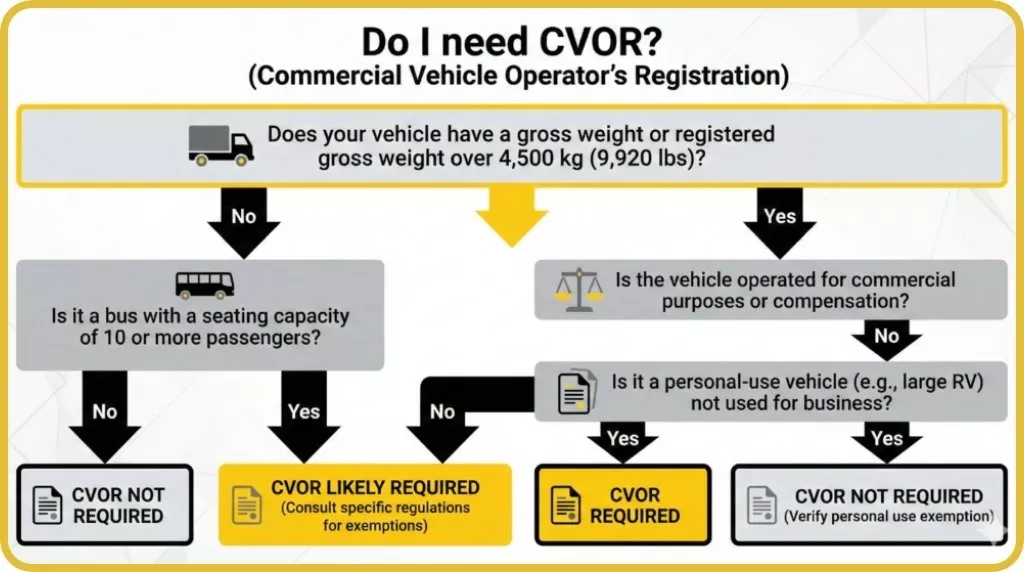
- CVOR: Ontario’s CVOR program applies to trucks with a registered gross weight or actual weight over 4,500 kg (including certain combinations).
- Daily inspections: Ontario has daily vehicle inspection requirements for commercial vehicles, and enforcement is taken seriously.
- Annual inspections: Ontario also expects commercial vehicles to meet periodic inspection requirements, including annual inspection expectations.
- Municipal rules: Some cities have local business licence rules, parking restrictions, and loading rules that affect move-day operations.
Step 5: Insurance That Wins Bigger Jobs
Insurance is not only protection. It is also how you win better customers.
At a minimum, most movers look at commercial auto, cargo or contents coverage, and general liability. Customers worry about three things: damage, delays, and “who pays if something goes wrong.”
If you want condo boards, offices, and higher-value households to say yes, you need to speak clearly about coverage and process. Do not overpromise. Do not be vague. Be specific about what you cover and how claims are handled.
Step 6: The No-Surprise Quote System
Here is the truth: many movers lose money in the quote. Or they win the job and lose the review.
If you want a moving company business that customers trust, build a quote system that prevents surprises on move day.
Keep it tight:
- Quote format: hourly, flat-rate, or hybrid (pick the one you can deliver reliably)
- The 5 pricing drivers: crew size, time, access, distance, materials
- A clear change-order rule for extra stops, heavy items, stairs, or last-minute add-ons
- Photo inventory and room labels so “that was not included” does not become a fight
- A deposit and cancellation policy that is fair, but protects your schedule
Now, answer the question people always ask: how much does a moving company charge?
Your best answer is not a single number. It is a clean estimate based on time, crew size, access issues, and distance. When you explain it this way, customers feel the quote is justified.
Step 7: Operations That Keep Moves Smooth
Great marketing gets calls. Great operations keep reviews clean.
Your move-day flow should look like this: inquiry → walkthrough → quote → confirmation → prep call → move day → close-out.
Add one piece that most competitors do not teach well: a damage and dispute protocol. Keep it simple. If something breaks, you document fast, you communicate calmly, and you solve it before it becomes a one-star post.
This is also where you train your team. A good lead mover is not only strong. They are organized, polite, and clear with customers.
Step 8: Marketing That Does Not Depend on Buying Leads Forever
You want clicks and impressions, but you do not want to rent your business from lead platforms.
Start with Google Business Profile, then build a simple website with one strong service page and location coverage, and then build partnerships. Realtors, property managers, storage facilities, and condo concierges can all become steady referral sources.
You also need a repeatable review routine. Ask at the right time: right after the job is done and the customer is relieved. Keep it short and easy.
Step 9: Money Tracking That Stops “Busy but Broke”
A lot of new movers stay busy and still feel broke. That is usually a tracking problem.
Track profit per move with these basics: labour hours, fuel, materials, truck costs, refunds or claims, and the real time spent. Then focus on one simple KPI: profit per booked day.
This is also where people ask: how much does it cost for a moving company to start?
Your highest costs are usually the truck, insurance, fuel, equipment, and payroll. If you track these from day one, you can price with confidence and avoid undercharging.
Step 10: Your First 30-60-90 Day Ontario Launch Plan
This is how to start a moving business without drifting for months.
- Days 1–30: compliance checks, insurance, quote template, first 10 reviews
- Days 31–60: tighten pricing, add one niche, build 3 partner relationships
- Days 61–90: hire backup help, add packing as an upsell, review job profit weekly
Final Takeaway
If you follow these steps, you will not just “start a company.” You will start a moving operation that prices correctly, follows the rules, and earns reviews you can build on.
If you want help setting up your books, GST/HST routine, and clean financial tracking from day one, Bestax Accountants can support the back-office side so you can focus on booking and delivering great moves.
Quick FAQs
Do I need CVOR for a moving company in Ontario?
You may, depending on your truck’s registered gross weight or actual weight. Ontario’s CVOR program applies to trucks over 4,500 kg in many commercial-use cases.
How to start a moving company if I have no truck yet?
Start with your niche, quote process, and registrations first. Then rent a truck for early jobs while you validate pricing and demand. Buy or lease once your numbers are stable.
How much does a moving company cost for customers?
It depends on time, crew size, access issues, distance, and materials. A clear estimate that explains these drivers builds trust and reduces disputes.
What insurance do customers expect from a mover?
Most customers expect commercial auto coverage plus some form of contents or cargo protection and liability coverage. They also expect a clear process if something is damaged.
How do I avoid disputes about “extra items” on move day?
Use a photo inventory, room labels, and a written change-order rule for add-ons. Confirm changes before loading, not after.
What do moving companies do?
They plan, pack (optional), load, transport, unload, and sometimes store items. Good movers also manage timing, building rules, and damage prevention.
How to start a moving company in Canada in 2026?
Register your business, set up tax accounts, get the right insurance, confirm vehicle compliance, build a quote system, then launch a simple marketing engine.
How fast can you launch?
Most people can launch in 2–6 weeks, depending on truck access, insurance approval, and setup speed.
Do you need a special “moving licence” in Ontario?
There is no single “moving licence,” but you still must meet business, municipal, and vehicle rules. That is where people get burned.
Disclaimer: The information provided in this blog is for general informational purposes only. For professional assistance and advice, please contact experts.