

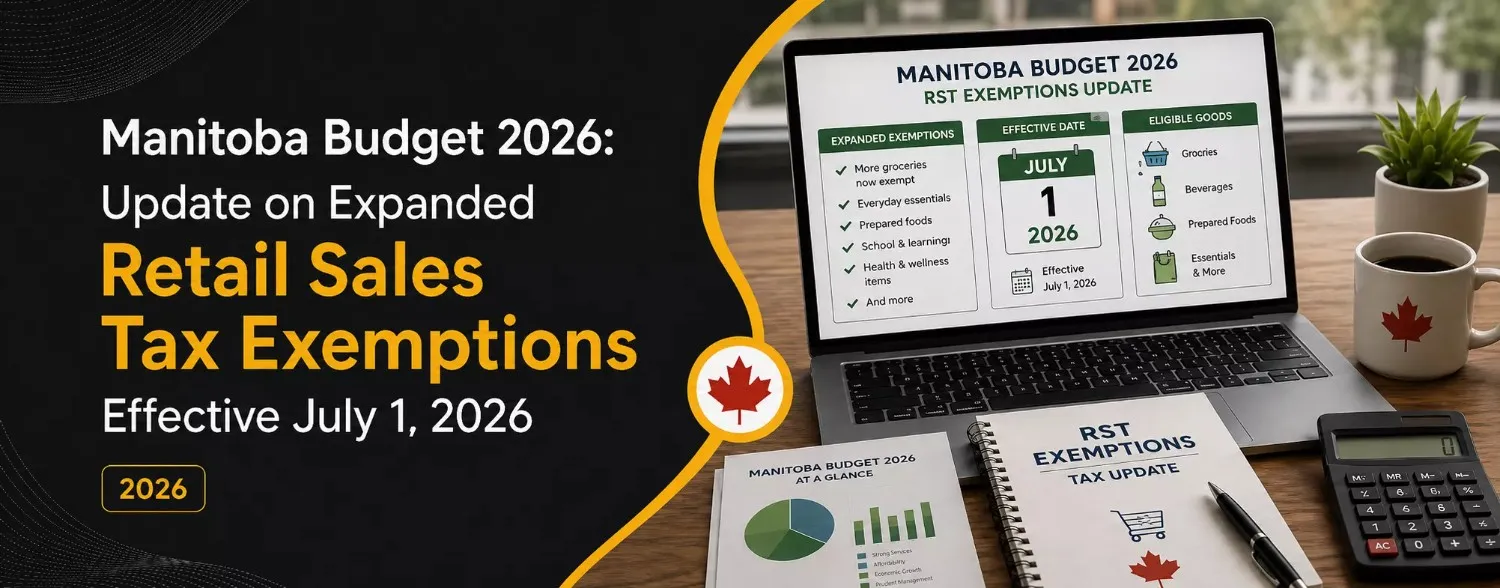
Manitoba Budget 2026 removes the 7% provincial retail sales tax from a much wider range of food and beverages sold at grocery stores, and this expanded exemption takes effect on July 1, 2026. It builds on the existing exemption for basic groceries so that items like prepared meals, snacks, and many drinks become tax free at the checkout.
If you have ever wondered why a rotisserie chicken or a bag of chips cost a little more than the milk in your cart, this is the change that fixes it. Below is a plain and practical breakdown of what Manitoba Budget 2026 changes, what stays the same, how much shoppers and families can expect to save, and what grocery retailers need to do to stay compliant.
What Is Manitoba Budget 2026?
Manitoba Budget 2026 is the province’s annual financial plan, tabled at the Manitoba Legislature on March 24, 2026 by Finance Minister Adrien Sala. Much of the budget focuses on affordability, and one of its most talked about measures is the expansion of the retail sales tax exemption on food and beverages.
Retail sales tax, often called RST or PST, is the 7% provincial tax that Manitoba applies to many goods and services. Basic groceries such as bread, milk, eggs, fresh fruit, vegetables, and most meat were already exempt. What changes now is that the exemption grows to cover most of the remaining food and beverage items that shoppers buy at grocery stores.
What the Expanded RST Exemption Actually Means
Starting July 1, 2026, the Manitoba government removes RST from additional food and beverages for human consumption sold at grocery stores. The exemption applies regardless of packaging or serving size, which removes a lot of the confusion that used to surround single servings and small packages.
In simple terms, if you are picking up food and drinks at a grocery store to feed your household, most of what used to carry a 7% tax will now be tax free. This is in addition to, not a replacement for, the existing exemption on basic groceries.
Foods and Beverages That Become Tax Free
The official Manitoba Finance notice lists the categories that move to tax free status. Here is what is now exempt when sold at a grocery store.
Ready to eat prepared foods
- Self serve sandwiches, soups, rotisserie chickens, samosas, and similar items.
- Vegetable, fruit, or gelatine salads sold already prepared, such as when the dressing is mixed in.
- Platters of desserts, cheese, canapés, pâtés, crudités, cold cuts, fruits, vegetables, frozen shrimp rings, sushi, and other arrangements of prepared foods.
Beverages
- Dealcoholized beer and wine containing 1% or less alcohol by volume.
- Carbonated beverages, including carbonated water whether flavoured or not.
- Fruit juice and fruit flavoured beverages, including those with little or no real juice.
- Powdered fruit flavoured drink mixes.
- Non carbonated drinks such as spring water, drinkable yoghurt, and chocolate milk.
- Sports and electrolyte drinks, caffeinated energy drinks, and ready to drink protein beverages, along with their dry mixes, provided they do not carry a natural health product licence from Health Canada.
Baked goods
- Cakes, muffins, pies, pastries, tarts, cookies, doughnuts, brownies, croissants, and similar products when sold in single servings or in quantities of fewer than six items.
Snack foods
- Pudding, mousse, and similar single serving desserts.
- Candy, chocolate, chewing gum, candy floss, and coated or sweetened nuts, seeds, and popcorn.
- Marshmallows and cream sweets.
- Chips, crisps, puffs, curls, sticks, popped popcorn, and pretzels.
- Salted nuts and salted seeds, and mixtures of two or more nuts.
- Granola products and bars, snack mixtures, cereal and nut bars.
- Ice lollies, juice bars, ice cream, frozen yoghurt, sherbet, and similar frozen treats in single servings.
- Fruit bars, rolls, and drops, and energy or protein bars without a Health Canada natural health product licence.
Environmental levies and recycling fees connected to these now exempt items are also free of RST.
What Stays Taxable
Not everything at the grocery store becomes tax free. The following remain subject to RST no matter where they are sold:
- Beverages with an alcohol content greater than 1%.
- Dietary supplements that carry a natural health product licence or homeopathic number from Health Canada, with prenatal vitamins being the exception.
- Pet foods.
Prenatal vitamins are a notable win for families, since they also become RST exempt on July 1, 2026.
Grocery Store Versus Restaurant: Where the Exemption Applies
This is the point that trips up most shoppers, so it is worth being clear. The expanded exemption applies to grocery store purchases, not to meals bought at food service businesses. RST continues to apply to sales made by:
- Restaurants, bakeries, food courts, coffee shops, cafeterias, concession stands, food carts, and food trucks.
- Food service areas inside grocery stores where you cannot pay at the regular grocery checkouts.
- Licenced premises such as bars and lounges.
- Cinemas, sports venues, and live entertainment venues that charge admission.
- Sports and recreational facilities such as arenas, golf courses, and curling clubs.
- Vending machines and catering contracts.
So a sandwich grabbed from the grocery shelf is now tax free, while the same sandwich ordered at the store’s sit down café is still taxed.
How Much Will Manitobans Save?
According to the Government of Manitoba, removing PST from all grocery food items will save Manitobans a total of $24 million. For a typical household, the province’s announcement points to savings of roughly $100 a year, depending on shopping habits and how often prepared foods and snacks land in the cart.
For families feeling the weekly pinch of grocery bills, that relief shows up on the everyday convenience items that used to carry the extra 7%, such as the rotisserie chicken and salad picked up on a busy weeknight.
What This Means for Grocery Retailers and Businesses
For business owners, an exemption is only helpful if it is applied correctly. Grocery retailers operating in Manitoba need to make sure their point of sale systems, product tax codes, and staff training reflect the July 1, 2026 change. Charging tax on a now exempt item can lead to customer complaints and refund headaches, while failing to tax items that remain taxable, such as alcohol above 1% or pet food, creates compliance risk.
Retailers with both a grocery section and an in store food service counter face the added task of separating exempt grocery sales from taxable prepared food service sales at different checkouts. Getting the tax coding right across both is where many stores will need support.
This is the kind of behind the scenes work that a professional accounting team handles quickly. At Bestax, our team helps businesses across Canada keep their sales tax, GST and HST filings, and bookkeeping accurate as rules change. With more than 10 years of combined experience, a team of over 35 professionals, and more than 1,000 companies successfully launched, we translate complex tax updates into simple, correct processes so you stay compliant without the stress. Clients often tell us they value that we explain everything in plain language with no jargon, which is exactly what a tax change like this calls for.
If you run a grocery or food business and want to be certain your systems are ready for the Manitoba RST change, book a free consultation with Bestax Accountants.
The Bigger Picture in Manitoba Budget 2026
The RST food exemption is the headline affordability measure, but Manitoba Budget 2026 includes other steps aimed at easing everyday costs. The budget increases affordability tax credits for renters and homeowners and makes prenatal vitamins tax free. Personal and corporate income tax rates were left unchanged, and Manitoba continues to apply a 0% provincial rate on active business income up to the small business limit. Businesses should also note that mandatory electronic filing and payment for RST registrants is planned for a future year, so building good digital habits now is worthwhile.
Need Help Staying Compliant With the Manitoba RST Change?
Tax rules change often, and getting them right protects both your customers and your bottom line. Whether you are a grocery retailer updating your systems or a business owner who simply wants clarity, the team at Bestax is here to help with retail sales tax, GST and HST, bookkeeping, corporate tax, and more. Book your free consultation today and let our experts handle the details while you focus on your business.
Quick FAQs
Do businesses need to update their systems for the RST change?
Yes. Grocery retailers should update point of sale tax codes and train staff so exempt items are no longer taxed and items that remain taxable are handled correctly. Bestax can help set this up.
What is the Manitoba Budget 2026?
Manitoba Budget 2026 is the province’s yearly financial plan, tabled on March 24, 2026. Its most notable tax measure expands the retail sales tax exemption on food and beverages sold at grocery stores, effective July 1, 2026.
What is changing with retail sales tax in Manitoba in 2026?
Manitoba is removing the 7% retail sales tax from most remaining food and beverage items sold at grocery stores. Prepared foods, snacks, candy, baked goods, and many drinks become tax free, adding to the existing exemption on basic groceries.
When does the Manitoba RST food exemption take effect?
The expanded exemption takes effect on July 1, 2026. Purchases of qualifying grocery food and beverages made on or after that date are free of retail sales tax.
Which foods and beverages become tax free in Manitoba?
Ready to eat prepared foods, snack foods like chips and candy, baked goods in small quantities, and many beverages including carbonated drinks and juices become tax free when sold at grocery stores. Prenatal vitamins also become exempt.
Do I still pay retail sales tax on restaurant meals in Manitoba?
Yes. The exemption applies to grocery store purchases, not to restaurants, cafés, food trucks, or in store food service counters. Meals from those businesses remain taxable.
How much will Manitoba families save?
The Government of Manitoba estimates the change saves Manitobans a total of $24 million, with many households saving around $100 a year depending on their shopping habits.
Is candy tax free in Manitoba now?
Yes. Candy, chocolate, chewing gum, and similar confectionery become tax free when sold at grocery stores as of July 1, 2026.
Are prepared foods like rotisserie chicken tax exempt?
Yes. Self serve ready to eat items such as rotisserie chicken, sandwiches, soups, and samosas sold at grocery stores are exempt from retail sales tax under the new rules.
Does the exemption apply to alcohol or energy drinks?
Beverages with more than 1% alcohol remain taxable. Energy and sports drinks are exempt only if they do not carry a Health Canada natural health product licence.
Disclaimer: The information provided in this blog is for general informational purposes only. For professional assistance and advice, please contact experts.