
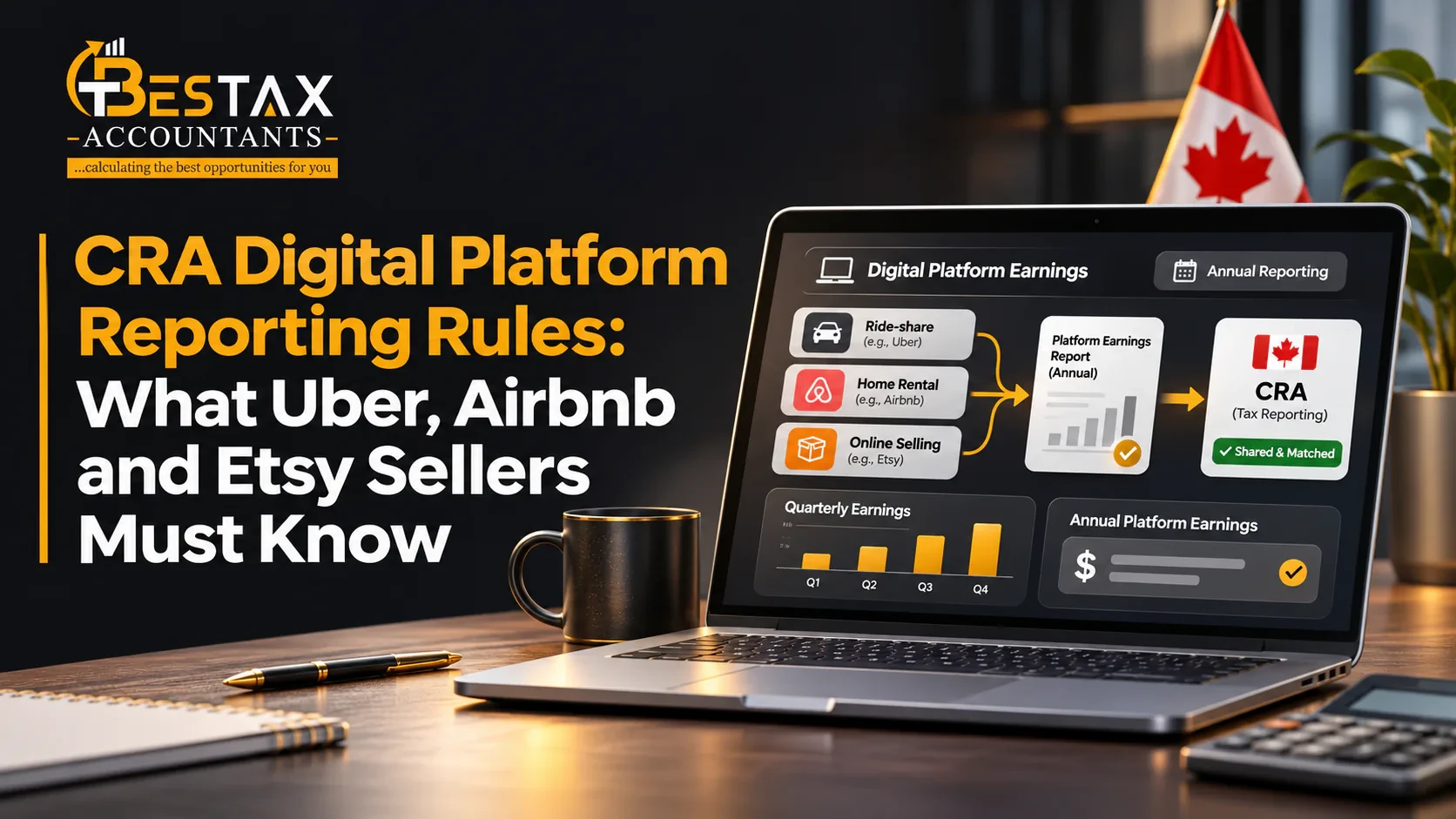
CRA digital platform reporting means Uber, Airbnb, Etsy and similar apps now report your earnings to the Canada Revenue Agency. The rules started in 2024. The first reports reached CRA by January 31, 2025.
If you drive, host or sell online, CRA already sees what you earned. Your tax return has to match.
What CRA digital platform reporting requires from platform operators
The reporting rules for digital platform operators sit in Part XX of the Income Tax Act. Canada based them on the OECD model rules, which many countries now use.
A platform operator is any company that runs an app or website connecting sellers with buyers. Uber, DoorDash, Airbnb, VRBO, Etsy and eBay all qualify.
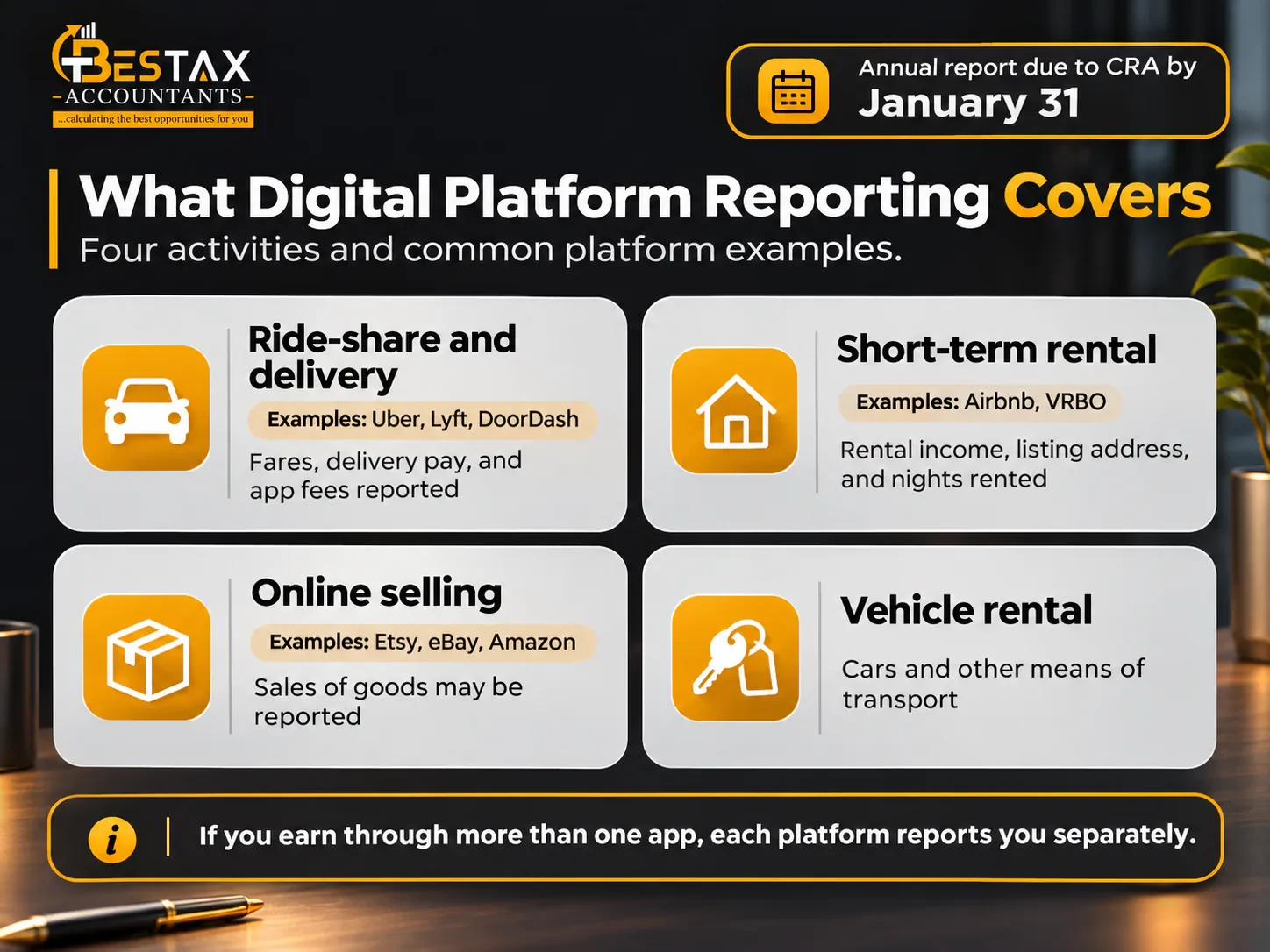
The annual January 31 report
Each year, operators collect data on their sellers for the calendar year. They file it with CRA by January 31 of the next year.
They must also send you a copy of what they reported by the same date. That copy is your best check. If your return shows less than the platform reported, expect questions.
Four activities trigger reporting
The rules only cover "relevant activities." These are:
- Renting out real property, such as a home, condo or room
- Personal services, such as rides, deliveries and odd jobs
- Selling goods
- Renting out vehicles or other means of transport
If you only buy through these apps, the rules don't apply to you.
Who CRA digital platform reporting covers
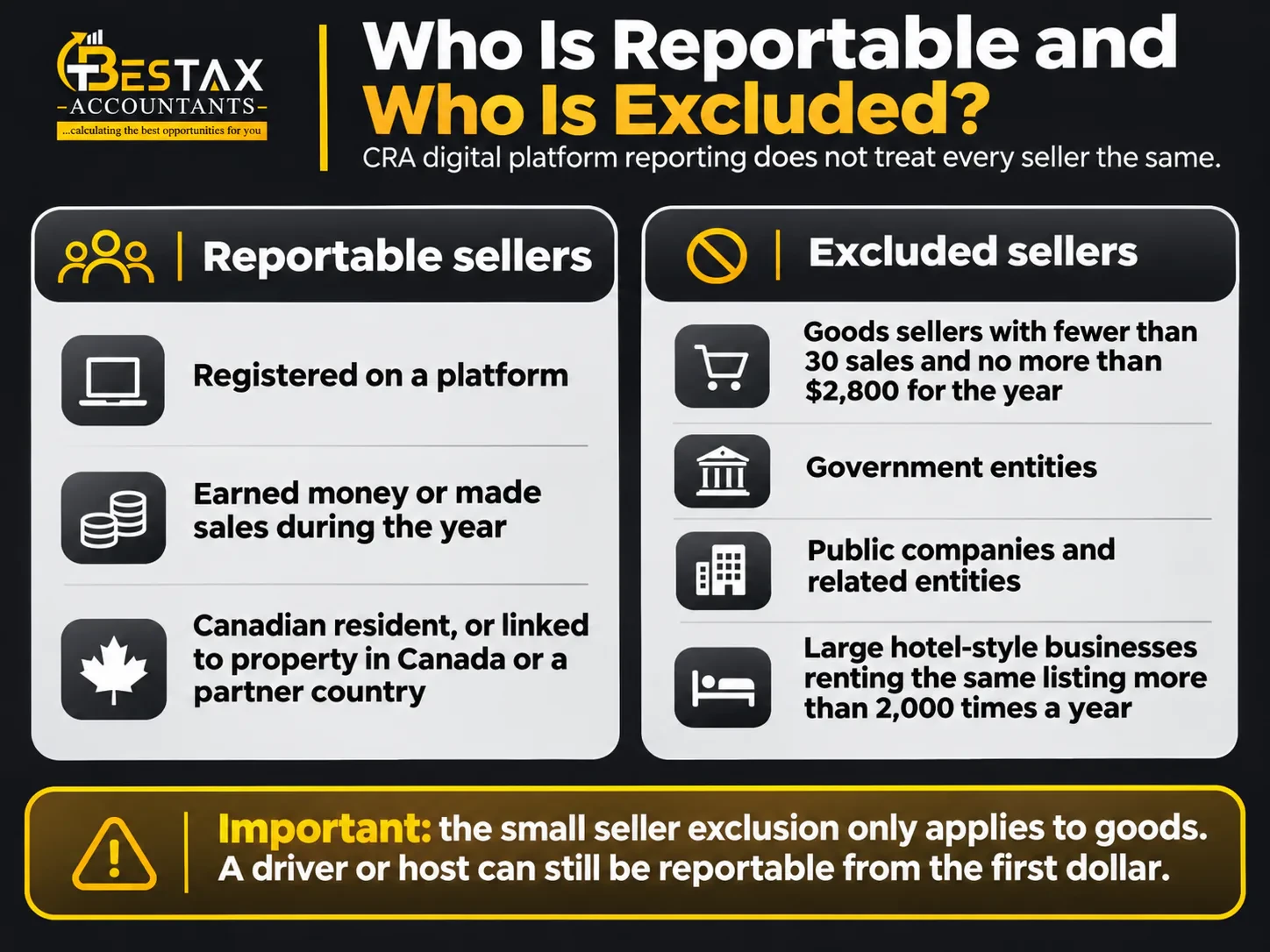
The rules target "reportable sellers." You are one if you're registered on a platform, earned money or made sales there during the year, and don't fall into an excluded group.
You also need a link to Canada or a partner country. Being a Canadian resident is enough. So is renting out a property located in Canada.
How the rules apply to Uber, Airbnb and Etsy sellers
| Platform type | Example | What gets reported |
|---|---|---|
| Ride-share and delivery | Uber, Lyft, DoorDash | Fares and delivery pay, plus fees the app kept |
| Short-term rental | Airbnb, VRBO | Rental income, each listing's address and nights rented |
| Online marketplace | Etsy, eBay, Amazon | Sales of goods, unless you qualify for the small seller exclusion |
If you run more than one side hustle, each app reports you separately. CRA adds them up.
Who is excluded from reporting
You are not a reportable seller if you are:
- A seller of goods with fewer than 30 sales and no more than $2,800 in total for the year
- A government entity
- A company whose shares trade on a stock exchange, or a related company
- A business renting the same listing more than 2,000 times a year, such as a large hotel
The small seller rule only covers goods. A driver or host with one booking and $50 in pay is still reportable.
What platforms share under CRA digital platform reporting
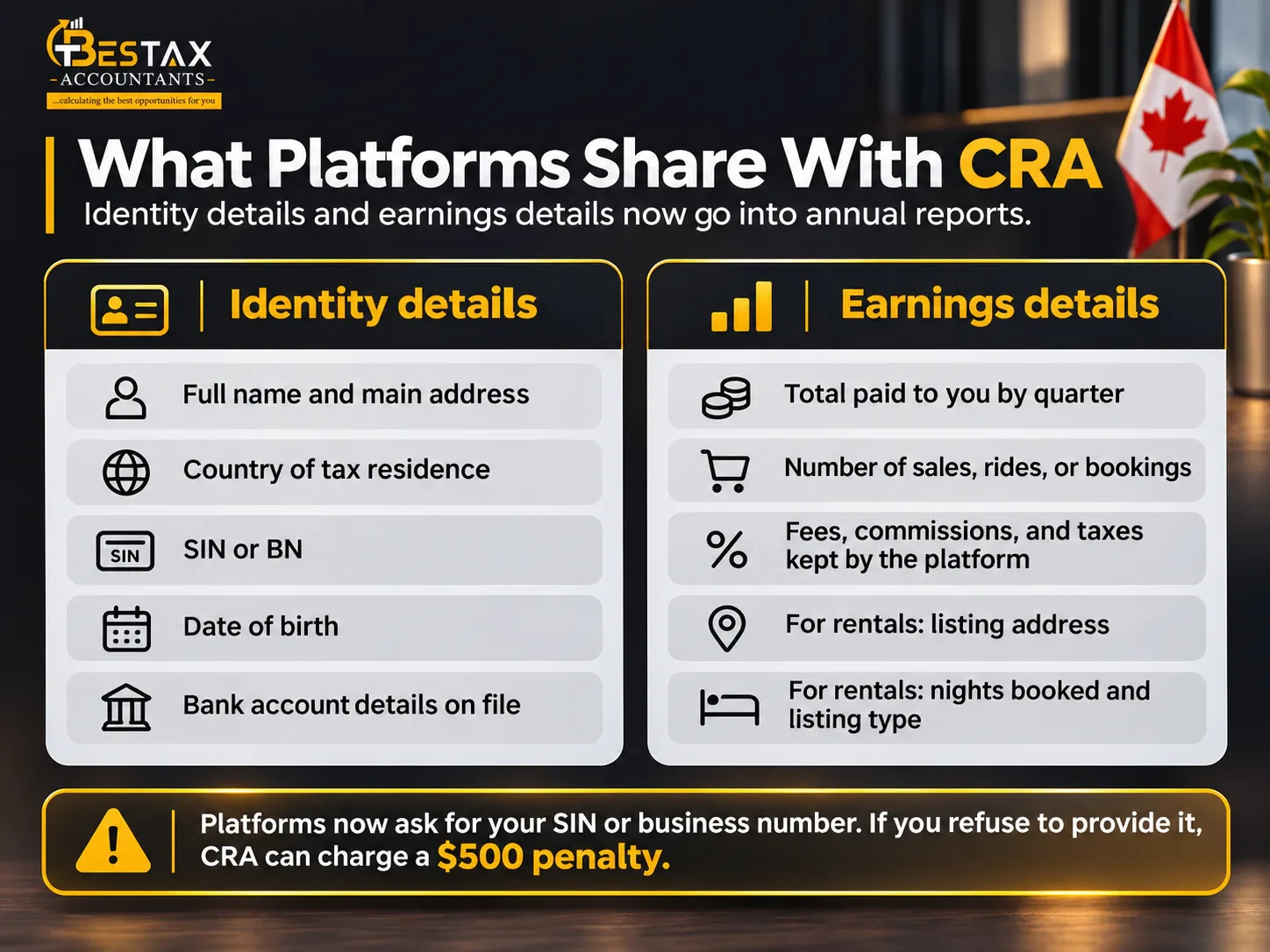
Platforms report two kinds of information: who you are and what you earned. Here is what CRA lists as reportable for each seller.
| Identity details | Earnings details |
|---|---|
| Full name and main address | Total paid to you, broken down by quarter |
| Country of tax residence | Number of sales, rides or bookings |
| SIN or BN | Fees, commissions and taxes the platform kept |
| Date of birth | For rentals: each listing's address |
| Bank account details on file | For rentals: nights booked and listing type, where available |
Platforms now collect your SIN or BN
Platforms now ask for your social insurance number or business number. This is required, not optional.
If you refuse to give it, CRA can charge you $500 for each failure. Only enter it inside the app or on the platform's official site. Scammers send fake requests that look real.
CRA shares the data with other countries
CRA swaps this data with partner countries that use the same OECD rules. If you rent out a cottage in Canada but live abroad, CRA still gets the numbers.
It works the other way too. Foreign platforms with Canadian sellers report them too, either to CRA or to their home tax authority, which passes the data on.
CRA digital platform reporting and your tax return
The rules didn't create a new tax. Gig income was always taxable. What changed is that CRA no longer relies on you to tell it.
CRA gig income reporting on Form T2125
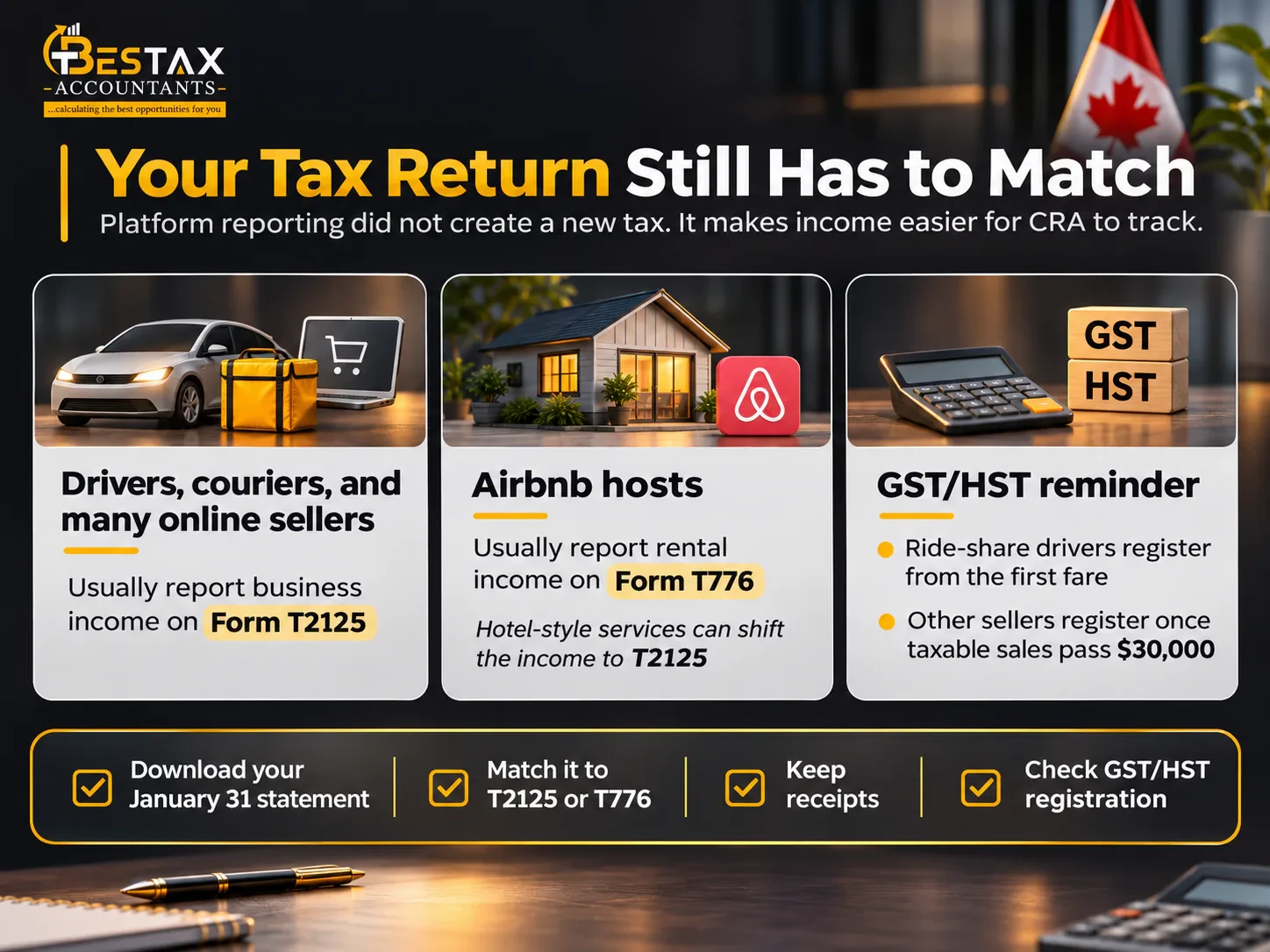
Drivers, couriers and online sellers are self-employed for tax purposes and report on Form T2125, Statement of Business or Professional Activities. You report gross income first, then claim expenses like fuel, phone, platform fees and supplies.
Compare your T2125 gross income with the platform's January 31 statement. The two numbers should line up. If they don't, keep a note explaining why, such as refunds or a different year-end.
Does CRA know about my Airbnb income?
Yes. Airbnb reports your payouts, every listing address and how many nights each was booked.
Most hosts report this as rental income on Form T776. If you offer hotel-style services like daily cleaning or meals, CRA may treat it as Airbnb business income on T2125 instead.
Don't forget GST/HST
Ride-share drivers must register for GST/HST from their first fare. The usual $30,000 small supplier limit doesn't apply to them, as our Uber driver tax guide explains.
Other sellers must register for GST/HST once their taxable sales pass $30,000 in one calendar quarter or over four consecutive quarters.
Unreported income under CRA digital platform reporting
CRA now matches platform data against tax returns. A gap between the two is easy to spot, and it often leads to a letter or a review.
Penalties you can face
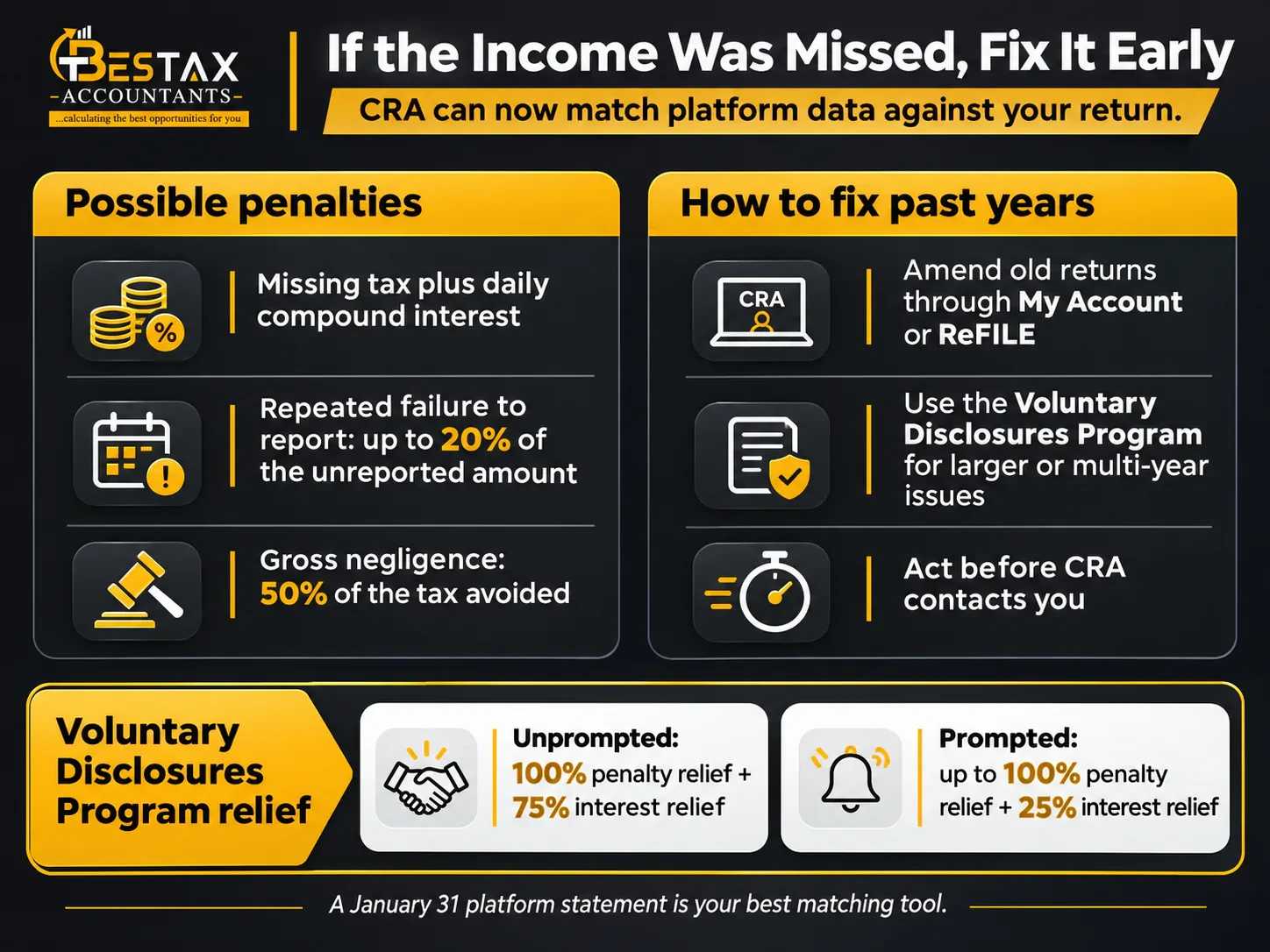
If CRA reassesses you, you pay the missing tax plus daily compound interest. Penalties can add more:
- Repeated failure to report: if you leave out $500 or more twice in four years, federal and provincial penalties together can reach 20% of the unreported amount.
- Gross negligence: if CRA decides you knowingly left income out, the penalty is 50% of the tax you avoided.
These apply on top of the tax itself. For a driver who skipped $20,000 of fares, the total can sting.
How to fix past years
You can amend old returns through My Account or ReFILE. If the amounts are large or go back several years, look at the CRA Voluntary Disclosures Program instead.
Timing matters here. Since October 1, 2025, CRA gives more relief to "unprompted" disclosures made before it contacts you.
| Type of disclosure | Penalty relief | Interest relief |
|---|---|---|
| Unprompted (before CRA contacts you) | 100% | 75% |
| Prompted (after CRA contact or third-party information about you) | Up to 100% | 25% |
If CRA has already contacted you, or holds specific third-party information about you, your disclosure counts as prompted. That means less interest relief. We recommend acting before that letter arrives.
CRA digital platform reporting FAQs
Yes. The small seller exclusion only stops the platform from reporting you. If you sold for profit, you still report that income yourself.
No. A missing statement doesn't change what you owe. Check the tax documents section of each app's seller account. If it isn't there, ask the platform's support team.
Contact the platform and ask for a corrected report. Keep your own records of sales, refunds and payouts so you can explain the difference to CRA.
Usually not. Selling your own used items for less than you paid isn't income. Buying items to resell for profit is a business, and that income is taxable.
No. You don't attach it to your return. Use it to check your numbers and keep it with your records.
CRA digital platform reporting checklist for gig sellers
CRA sees your platform earnings before you file. Use this list each tax season:
- Download the January 31 statement from every app you used
- Match each statement to the income on your T2125 or T776
- Keep receipts for fuel, supplies, platform fees and home office costs, and track business expenses as you go
- Check whether you need a GST/HST number
- Fix any missed income from past years before CRA contacts you
Bestax helps drivers, hosts and online sellers file clean returns and correct past years. Book a call with our team before your next filing deadline.
Disclaimer: The information provided in this blog is for general informational purposes only. For professional assistance and advice, please contact experts.